Undergraduate Research at DSU: Where Students Turn Questions Into Research
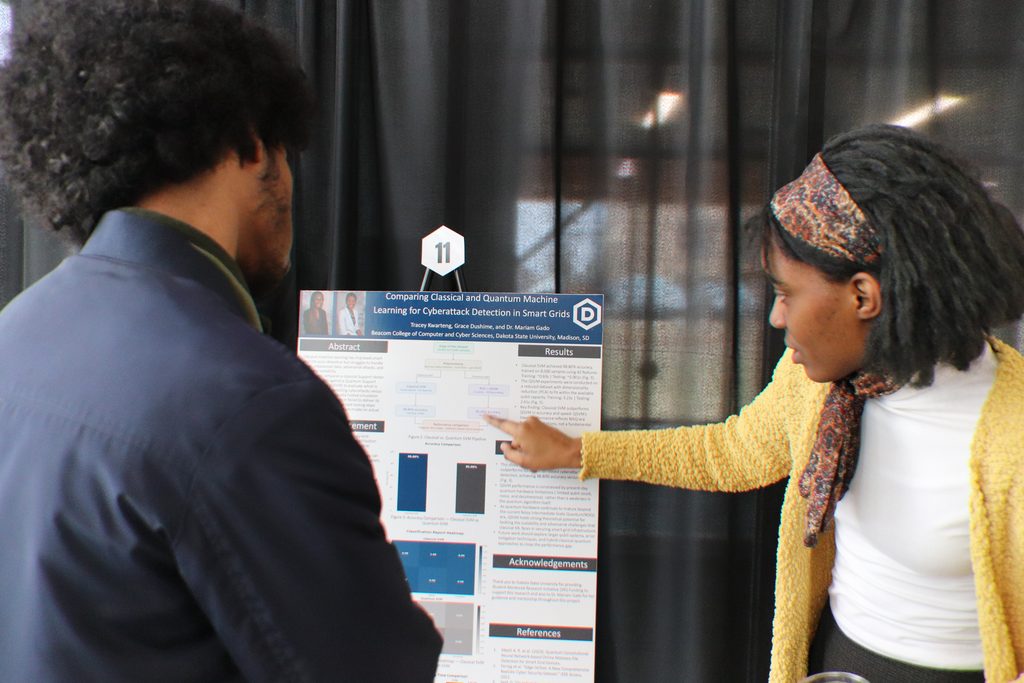
For many students, research can sound like something reserved for graduate students, professors, or people who already know exactly what they want to study. At Dakota State University, however, undergraduate research is designed to be much more accessible. Students from different majors and at different points in their college careers can get involved, work alongside faculty, and explore questions that go beyond what they learn in a regular class.
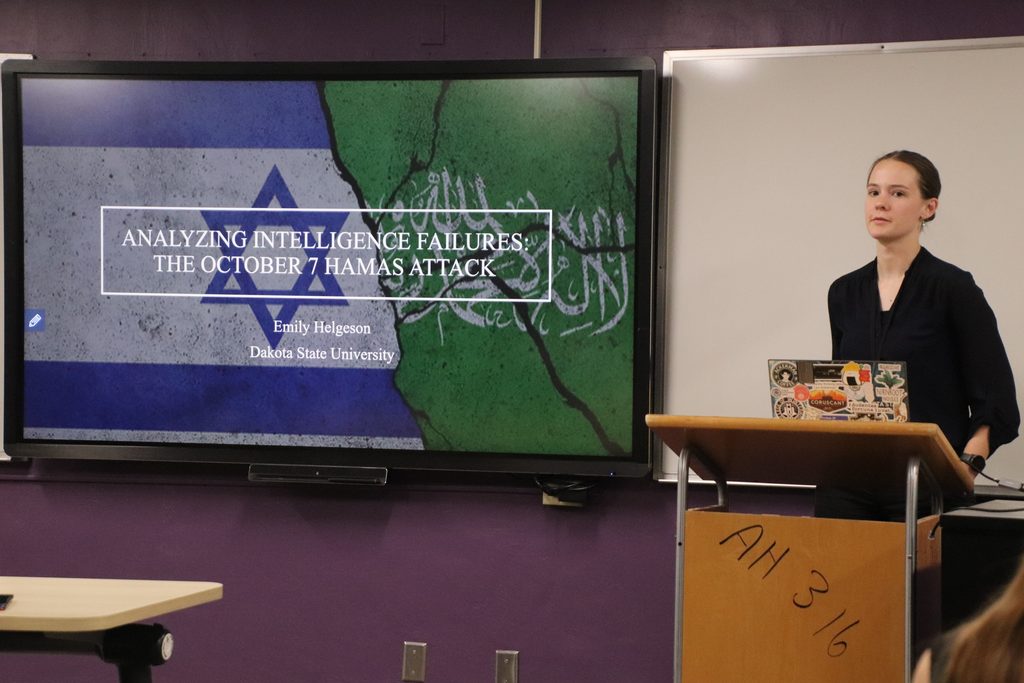
One of the ways students can learn more about research is through DSU’s Undergraduate Research Seminar. The seminar gives undergraduate students a place to present their research and gain experience communicating their work to an audience. Faculty members who conduct research with undergraduate students or have projects available for students also present at the seminar.
The seminar is not necessarily about having a finished, perfect research project. It is also an opportunity to see what other students and faculty are working on and get an idea of what research at DSU actually looks like. Recent presentations have covered topics ranging from the antibacterial potential of honey and Parkinson’s disease detection using generative modeling to static analysis of open-source software.
For students who have never participated in research before, simply attending one of these seminars can be a good starting point. Seeing other students present their work can make research feel less intimidating and can also help students discover areas they may want to explore themselves.
Getting involved does not require students to already have a research question figured out. DSU recommends starting with something that interests you. It could be a topic from a class that made you curious, a problem within your major, or something you have always wanted to investigate. From there, students can find a faculty member whose interests connect with their idea and set up a meeting to discuss it.
The faculty mentor can be an important part of the process. Students do not have to figure everything out on their own. Faculty mentors can help students develop their questions, plan their projects, understand research methods, and keep track of their progress.
There are also several formal pathways for students who want to take research further. The Student Mentored Research Initiative (SRI) allows undergraduate students to work with a faculty mentor on a research or creative project. Projects can be initiated by either students or faculty, and selected projects receive budgetary support.
Another option is the Research Assistant and Mentor Program (RAMP). The program connects eligible students with faculty research mentors and provides opportunities to work on research projects. RAMP is particularly useful for students who qualify for Federal Work Study and want research experience as part of their work.
Research at DSU is also not limited to one particular field. Students have worked on projects in areas including computer science, cybersecurity, artificial intelligence, biology, economics, mathematics, digital arts and other disciplines. DSU’s research opportunities include work in its applied research labs, including Madison Cyber Labs, as well as research courses, internships and grant-funded projects.
For students interested in science and biomedical research, DSU has also recently expanded its opportunities through its membership in the South Dakota IDeA Network of Biomedical Research Excellence (INBRE). The partnership allows DSU students to apply for research opportunities with faculty and laboratories throughout the INBRE network, including paid undergraduate research experiences.
One of the biggest opportunities for student researchers comes at the end of the process: the annual DSU Research Symposium. Each spring, students and faculty come together to present their work through poster presentations, oral presentations, fine arts exhibits and performances. The event gives students a chance to explain their work to people outside their immediate research group and receive feedback.
Research can also become something students can point to after graduation. It gives them experience with problem-solving, critical thinking, collaboration, research methods and communicating complicated ideas. For students considering graduate school, research can provide an early look at what academic research is like. For students heading directly into the workforce, it can demonstrate the ability to investigate a problem and develop a solution rather than simply follow instructions.
And perhaps the most important part is that students do not have to wait until senior year. DSU specifically encourages students to become involved regardless of what year they are in, noting that finding a project and building a relationship with a faculty mentor can take time. Starting early can give students more opportunities to develop their ideas and gain experience.
For anyone interested in getting started, a simple first step is to attend an Undergraduate Research Seminar, talk with a professor about an area of interest, or look through DSU’s current research opportunities. Students can also contact Dr. Andrew Sathoff, DSU’s Director of Undergraduate Research, for guidance on getting involved.
Research at DSU does not have to begin with a groundbreaking idea. Sometimes it starts with something much simpler: a question you cannot stop thinking about.