Meet Dr. John Ballard, DSU’s New President
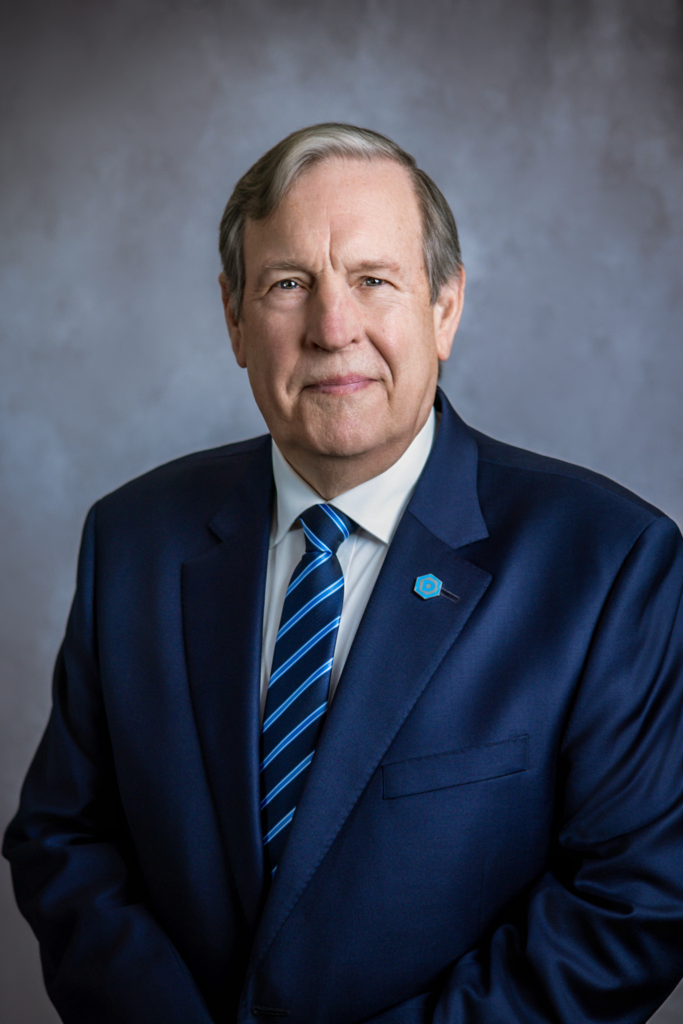
This June, Dakota State University welcomed its 24th president, Dr. John R. Ballard. He steps into the role after Dr. José-Marie Griffiths, who led DSU for years and is now moving into a new chancellor position to support the university’s cyber programs nationally.
The Beginning.
President Ballard did not grow up expecting a life in university leadership. He was a first-generation college student who earned his undergraduate degree at the United States Naval Academy, then into a career that started in the military and later moved into teaching and academic administration. He got his master’s degree from California State University, Dominguez Hills, and a Ph.D. in history from The Catholic University of America.
From there, his career took him across three continents. He was the founding Chair of Defence Studies at Massey University in New Zealand, taught at both the Naval War College and the National War College, served as Dean at the Near East South Asia Center for Strategic Studies and later at the National War College, and helped found the National Defense College in the United Arab Emirates. He also served as Vice President at the American Association of State Colleges and Universities and was the first Provost at the U.S. Merchant Marine Academy, where he helped recover the school’s accreditation and rebuilt its curriculum during a rough stretch that included COVID-19.
Most recently, he was president of the National Intelligence University in Maryland, a role he held since 2023. Under his leadership there, graduation rates rose by 10 percent over two years, and he acted as the school’s chief ambassador to federal officials and the broader intelligence community. Along the way he wrote seven books on national security and leadership and picked up honors including the Director of National Intelligence Distinguished Service Award, the Legion of Merit, and a Bronze Star for his service in Iraq.
Path to DSU.
The South Dakota Board of Regents ran a national search for DSU’s next president earlier this year and narrowed the field to three finalists, who visited campus in late March. Ballard has said the visit is what sold him on the job. He met with a small group of DSU students as part of his interview, and that meeting is what changed things for him.
He later described being struck by how much energy and pride was in the room with those students, and said that meeting the staff right after, and seeing how focused they were on taking care of students, is what sealed the deal for him. He and his wife, Rose, were already talking about wanting to live in Madison before he even got the official offer.
The Present.
President Ballard has been vocal about what drew him to DSU specifically. He has said the tech-centered, innovative culture here is what excited him most, and that he sees DSU as positioned to become the kind of new American university the country needs, one that breaks away from the older, more rigid model of higher ed and stays flexible to what students need today.
He has also spoken highly of South Dakota’s decision to build DSU around cyber and technology, calling it a smart move that gives the university room to pioneer new approaches to teaching while still keeping strong traditional academic programs. He sees real potential in DSU forming partnerships with other agencies and institutions nationally, something he said he started hearing about within 24 hours of his appointment being announced, as former colleagues reached out wanting to explore collaborations.
One project he has pointed to is the DSU Applied Research building opening in Sioux Falls this year, meant to create public-private partnerships around cybersecurity economic development. The idea is that DSU grads, and alumni who want to move back to the region, will have a growing pipeline of jobs working in secured environments close to home.
What’s Next?
President Ballard has made it clear he wants to be reachable and involved. His pitch for coming to DSU rested on the students he met in that first interview, and the culture of care he saw from staff. He sees DSU as a place built to occupy the problems of the future, and he wants students to feel like they are part of building the solutions.
You can find more about the Office of the President, including contact information, on the DSU website.