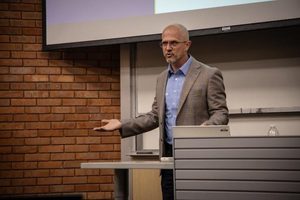
The Last Lecture
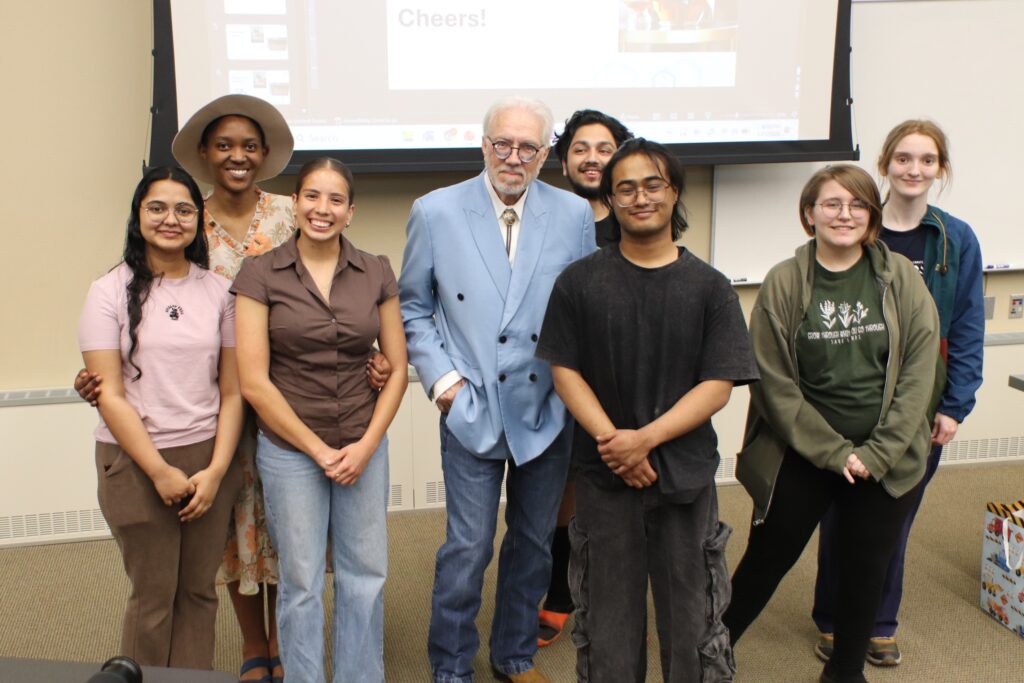
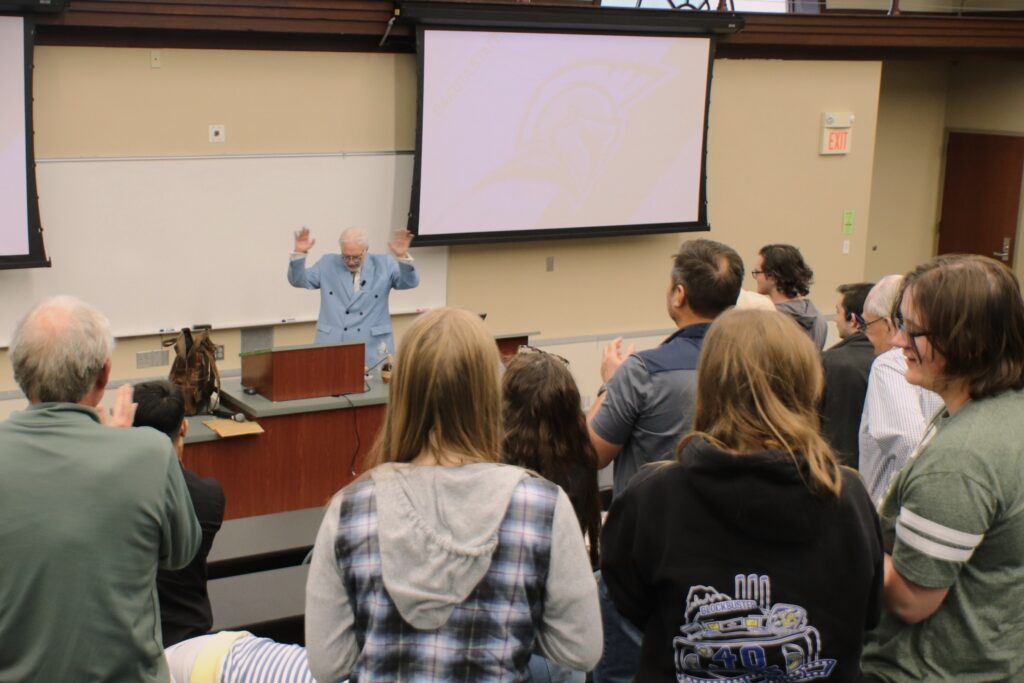
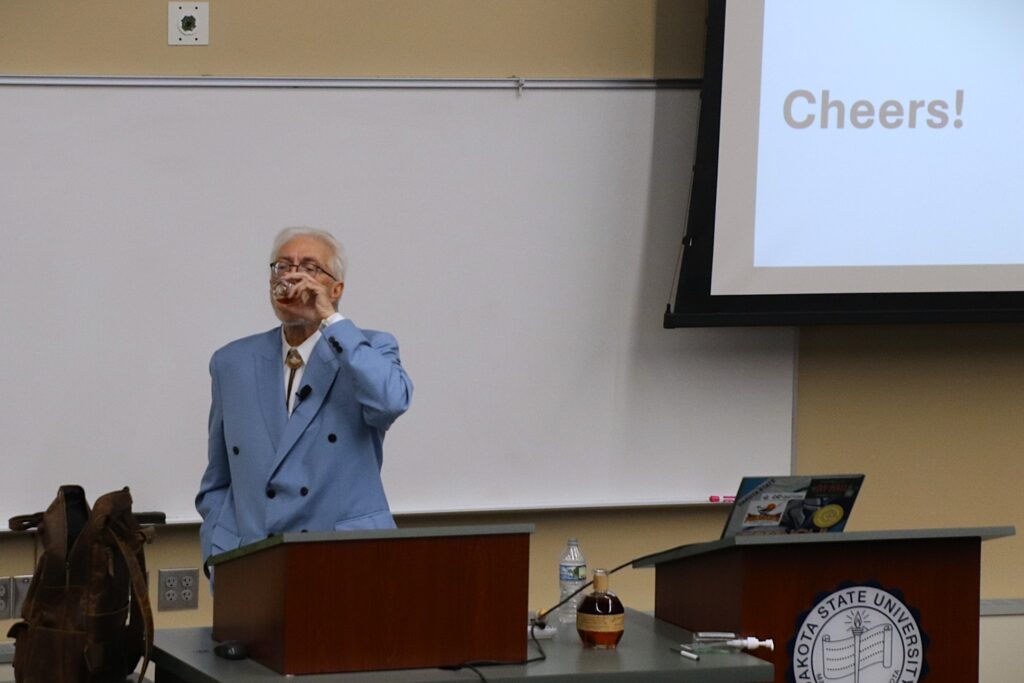
The Dakota State University campus settled into a quieter rhythm on Thursday evening, April 23, as students and faculty made their way to the Tunheim Classroom Building for a lecture shaped as much by reflection as by experience. Hosted by the General Beadle Honors Program and the Office of the President, “The Last Lecture” is an annual tradition in which Honors students select a retiring faculty member to deliver a final talk on a subject of their choosing. This year, that honor went to Michael Roach, an associate professor in the College of Business and Information Systems.
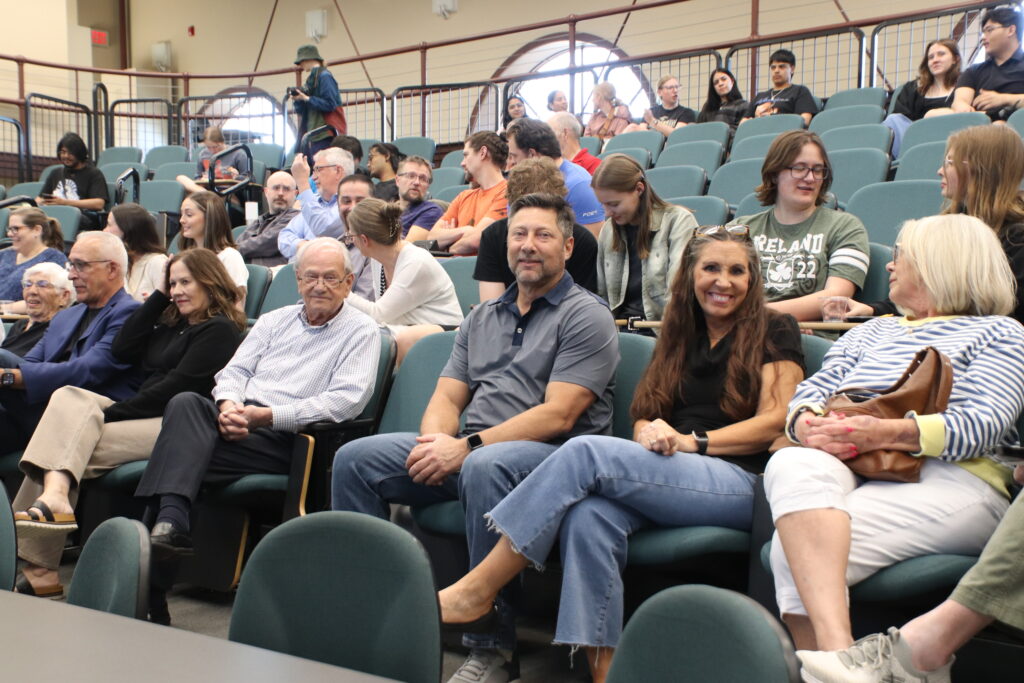
The evening began at 6:30 PM with a reception, followed by the lecture at 7 PM. The event was open to the public, and the room filled steadily, not with urgency, but with a sense of occasion. There was an understanding that this was not just another lecture. It was a closing chapter, shaped by decades of work and reflection.
Roach’s path to academia was not immediate. He spent the first half of his career in financial services, managing people, products, projects, and budgets before transitioning into teaching economics and management. Over time, that experience became central to his approach in the classroom. His lecture drew from more than 40 years of professional life, with a focus on building and sustaining high-performing organizations. He spoke about the importance of asking questions, especially “why,” and of engaging seriously with perspectives that differ from one’s own. He also emphasized something less technical but equally important. He credited students as a vital part of his own growth, noting that listening carefully can often lead to unexpected insight.
Among those in attendance were students who came not just to listen, but to interpret. One attendee approached the lecture with a careful, analytical mindset. He paid attention to how ideas were structured, how each point connected to a broader theme. For him, the lecture’s strength was in its discipline. He noted that Roach spoke with clarity and intention, avoiding unnecessary abstraction. The focus on practical experience stood out. He described the talk as grounded, shaped by years of testing ideas against reality rather than theory alone.
Another student experienced the evening through a lighter lens. She found humor in the quieter moments and appreciated how the lecture made space for personality. References to time spent outside the classroom, whether on Lake Madison or in the field with his dog, added a sense of familiarity that made the talk more engaging. She pointed out that even serious reflections can carry warmth, and that this balance made the lecture easier to connect with. She left the event amused in places, thoughtful in others, and glad that the tone never became overly rigid.
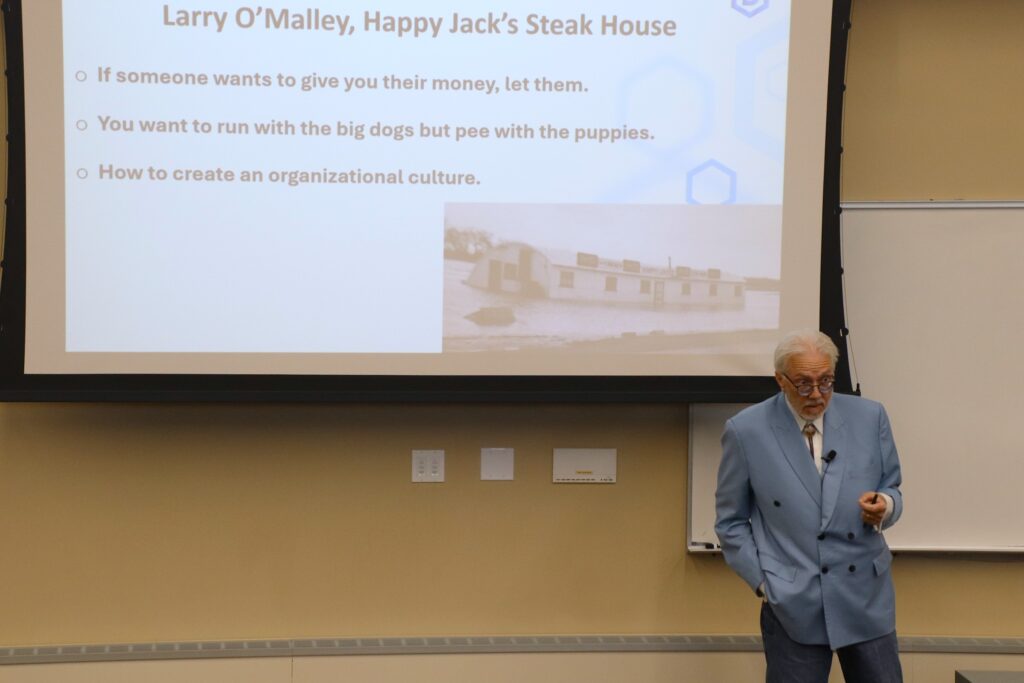
A third perspective was less fixed on specific details and more attuned to the atmosphere. He spoke about the feeling of the room, the way the lecture seemed to slow things down. Certain ideas stayed with him not as direct lessons but as impressions. The idea of a “last lecture” prompted him to think about direction, about what it means to look back while still moving forward. His takeaway was not a set of conclusions, but a shift in perspective that felt difficult to put into precise words.
The setting itself contributed to that sense of reflection. The Tunheim Classroom Building, familiar in its everyday use, felt different that evening. Conversations after the lecture were quieter and more deliberate. Some students lingered, continuing discussions that felt less like coursework and more like personal exchange.
The Last Lecture offered something that does not often fit into a syllabus. It created space for reflection, for interpretation, and for listening. Students left with different impressions, shaped by their own ways of seeing the world, but connected by a shared moment that carried a little more weight than expected.